Structure should fit your practice
There is no universal template that replaces professional judgment. A note should fit the type of care, the stage of the process, and the requirements that apply to your setting.
Make context easy to recover
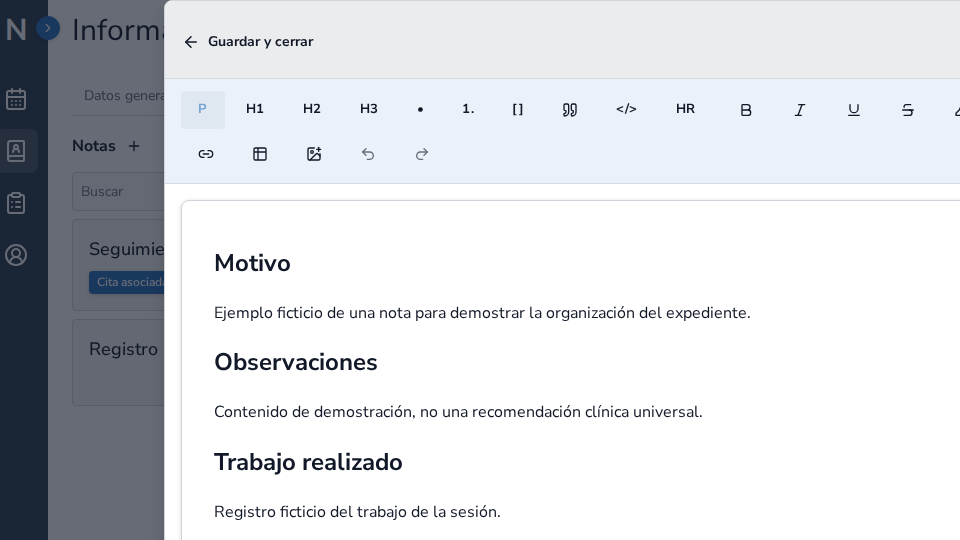
A note can be organized around the date, session focus, relevant observations, work completed, and next steps. These labels do not dictate content; they make review more consistent.
Keep distinctions clear
Separating observations, decisions, and pending work makes a note easier to revisit. Use precise language and avoid copying information already present in the record unless it adds new context.
Connecting the note to the client, appointment, and record helps you continue without relying on scattered files. NeuraClinic is designed to keep those relationships in one workflow.
A fictional organizational example
An example note might use headings such as session focus, observations, work completed, follow-up, and next steps. These headings are organizational prompts, not a mandatory clinical format.
Before closing, verify the date, client, title, new information, and pending work. Keep observations and professional interpretations distinguishable, and do not present this example as a treatment recommendation.