Keep context attached
An assessment is easier to review when you can identify the client, the date, and the required follow-up. A tool can organize this work; it does not replace professional selection or interpretation.
Separate instrument, result, and follow-up
Keeping these pieces distinct prevents confusing an administration record with later decisions. Use consistent names and record only the pending work you actually need to review.
Avoid overloading the record
Not every detail needs to be copied. Relate the assessment to the client record and review it from the same case. NeuraClinic is designed to preserve that relationship.
A safe demonstration flow
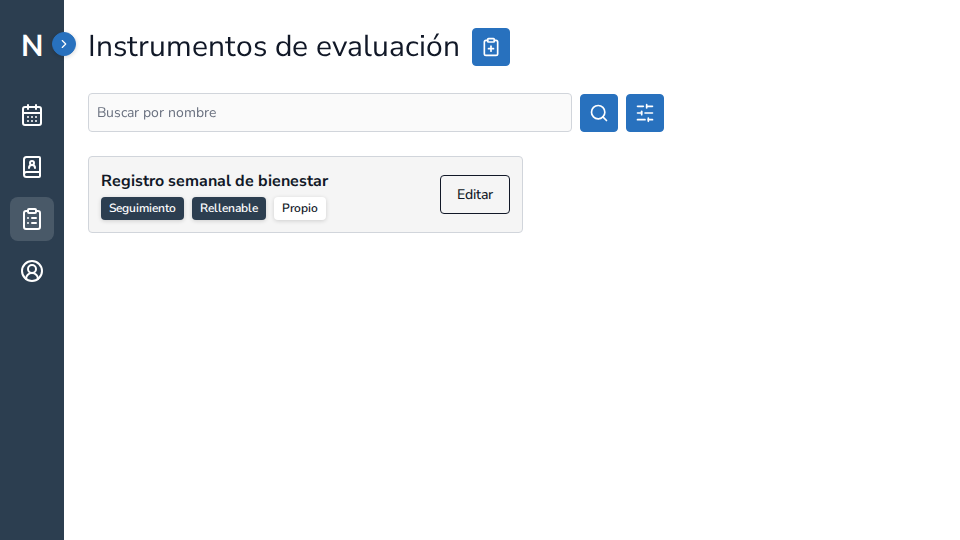
For a product demonstration, use an instrument created specifically for the demo, with fictional prompts and generic ranges. Show the instrument, a completed application, and the recorded result separately. Never present a commercial scale or a generated range as clinical interpretation.